

Book Review: Flesh by David Szalay
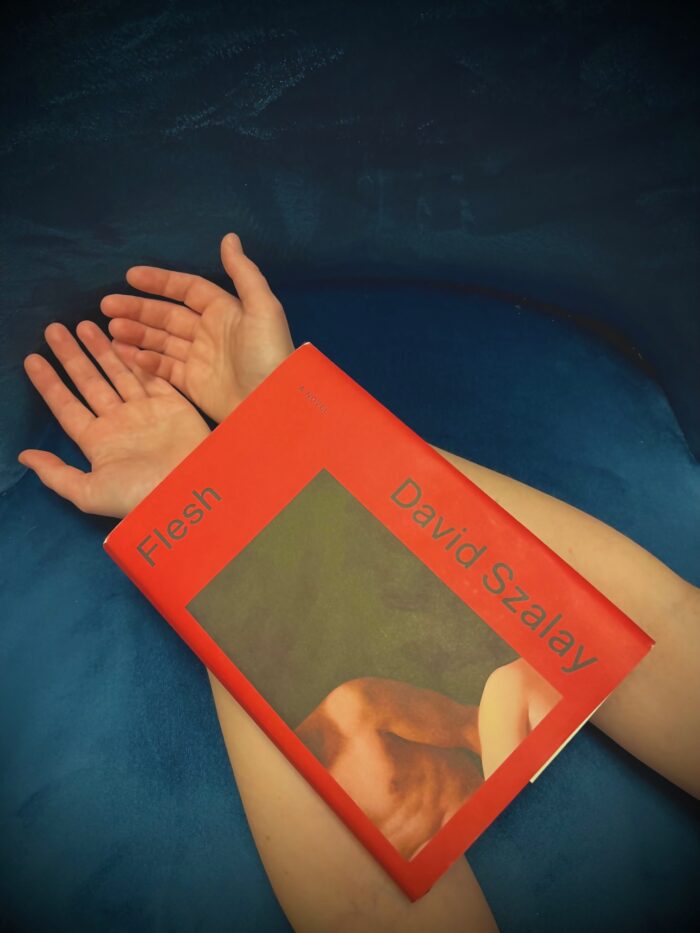
The premise of Flesh by David Szalay intrigued me when the publisher pitched it earlier this year; it’s about a man who gets caught up in the artificial world of extreme wealth. I thought sure, why not? So it arrived on my doorstep then sat on my book shelf. And then, it won the Booker Prize a few months ago, so I figured the writing was good enough too that it was time to give it a chance. Turns out these two elements – an engaging premise supported by competent writing – is all it really takes to make a winner of a novel. It seems too simple to be true, but it worked really well here.
Plot Summary
We meet István as a 15-year-old living with his mother in Hungary. She asks him to help the woman across the hallway with various chores around her house, and as they begin to spend more time together, they begin a physical relationship. Tragedy unfolds from this short-lived affair, which lands István in jail as a minor. The story then fast-forwards to him as a young man, out of jail and starting a new life. He joins the army and experiences even further traumatic events while on duty there, and upon his return, turns to personal security as a new way of making a living, and forgetting his past. He gradually makes his way into working security for the ultra-wealthy, then finds himself getting physically involved with a married, female client. His world continues to expand and grow, now making room for a life of helicopters, rare vehicles, and luxurious trips around the world. Yet, his new persona never seems to suit him, and while whispers of his past never seem to leave him, the constant and reassuring presence of his mother helps to keep him grounded. Their small apartment back in Hungary is only a distant memory, yet István continues to be drawn into the trajectory of other lives, some of his doing, and others not.
My Thoughts
At its heart, this is the story of one man’s life. Some may call it an extraordinary life, and there are surprising plot developments that shift István’s direction drastically, yet one could never call István himself extraordinary. In fact, as a protagonist, István is depicted as having things happen TO him, rather than by him. He is apathetic, steered into experiences by others who take pity on him, admire him, or punish him. This could also be a reflect of Szalay’s writing; the indifference that emanates from the page feels like a direct contradiction to the overthinking that women are so often criticized for; István doesn’t think, he acts. What’s the point of agonizing over every little decision, or what comes next, when his life seems to chug along regardless?
Women play a very narrow role in István’s life, either as caretakers, or lovers. He seems to fall into relationships, rather than pursue them. In a rare case of self examination, Istvan considers his latest physical encounter with a woman, but as always, he comes away feeling fairly neutral about it all:
“He has this feeling, with women, that it’s hard to have an experience that feels entirely new, that doesn’t feel like something that has already happened, and will probably happen again in some very similar way, so that it never feels like all that much is at stake. There’s often this feeling of – Yes, I like you, but I like other people as well. It’s not even that I like them more. It’s just that I don’t like them less. So to be with any one person feels like an arbitrary thing, and that arbitrary feeling has started to undermine any lingering sense that there might be a particular person that he’s somehow meant to be with (p. 152 of Flesh by David Szalay).
The above quote is a fair picture of the writing itself: spare, straightforward, and very little description. There’s quite a bit of dialogue, so the 350 pages feel more like 200, moving quite quickly.
This kind of book certainly won’t be for everyone, but I must admit I found a sort of morbid curiosity about it; “is this how some men truly think and view the world?” I would ask myself, as I continued through it, just a bit jealous of his cool demeanor. Obviously István is not a representation of all men, or even a large majority of them, but I did enjoy this glimpse into his inner life, even if there wasn’t much depth to it.



To be quite honest with you, if I got to that part about women all being the same and interchangeable and nothing is new, I might have had to put the book in the garbage disposal (though I understand many countries don’t have garbage disposals and can’t even imagine them, lol—yes, I spend time on Reddit).
I know what you mean, which is why I was so intrigued by this – as in, do men really think like this? I mean I know not all men think like this, but do… alot of them? Can alot of men relate to this protagonist? So many questions! haha
I love the picture you took for this post! I am also intrigued by this book, for the same reason. Damn men really live like this?? lol!
right? Like it sounds so simple, but at the same time, I have this sneaky suspicion they do have this lack of anxious thoughts running through their brain unlike us women. Things just seem so much simpler! And they likely have better sleeps LOL
I think your review has solidified that I do not want to read this! Which I suspected already but it’s nice to definitely not have a book to add to the TBR. So thanks!
haha that’s what I’m here for! LOL
It seems as though this didn’t settle with you as a story about one man, exactly, but that there was something else at work that left you feeling as though it offered some sort of key to how men more generally view the world? I’ve not read it, so I don’t have a thought on that (I’ve only read one of his books, the one about a flight, which I enjoyed, but never wrote about) …but from your beginning, I feel as though it’s every bit as likely that a woman could get caught up in the world of extreme wealth (I think that’s how you described it, I can’t flip back to check)? Your sense was that DS is making some broader comment about masculinity though?
Yes, a little bit of both I think. It’s about masculinity, but also about wealth. What makes this book so sparse and effective was the lack of introspection I think, and if it was a female’s perspective, I think there’d be much more introspection haha