
Book Review: Good Guys by Sharon Bala
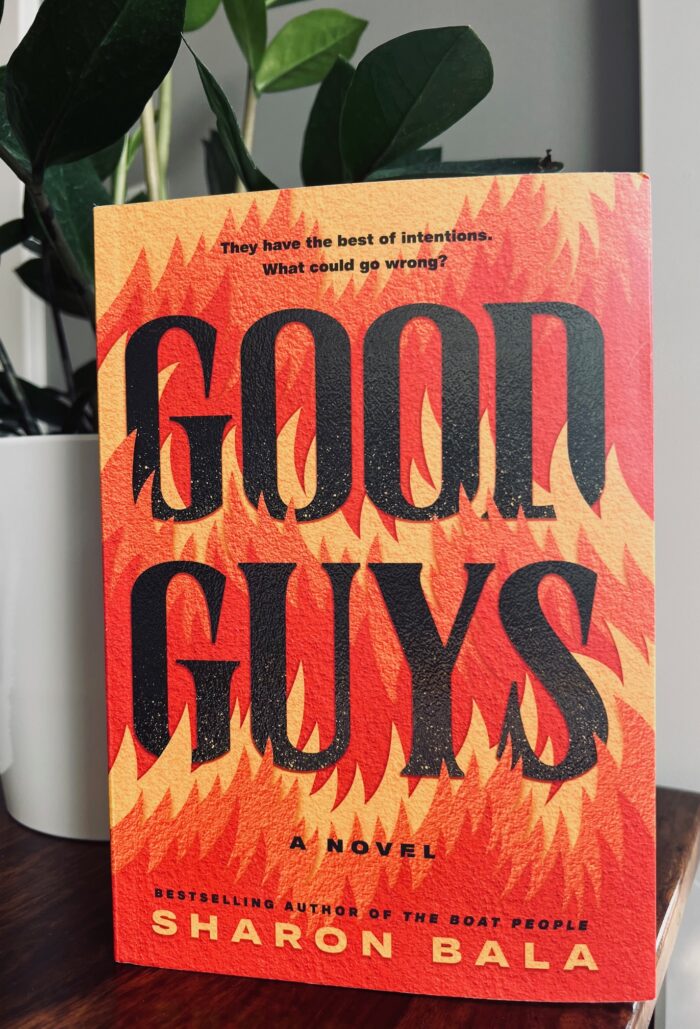
When Sharon Bala released a new book titled Good Guys, I recalled loving her debut novel a few years ago, so I was tempted to read it for that reason alone. Then, I learned her new novel was about a Canadian-based charity that does international aid and the complications of helping others, which really clinched it for me; I had to read this book! I’ve worked in the nonprofit sector for most of my career, and as a professional fundraiser I have a particular interest in discussion around philanthropy and good intentions, which this work of fiction is centered on. The fact that it’s written by such a talented writer as Bala AND it’s a compelling plot is simply the cherry on top for me.
Plot Summary
Children of the World is based in Toronto, but has aid locations in multiple countries. We learn about their activities through a few different characters; some based in their head office, and some based in Santa Rosa in Central America. Claire is the newly hired PR person in Toronto. She’s happy to have left a job defending massive corporations from scandal, but quickly realizes her new position isn’t just a major drop in pay, it could very well be temporary because it’s on the verge of bankruptcy. Luckily her social media posts attract the attention of an A-list celebrity who agrees to go down to Santa Rosa to volunteer, but while there, decides to adopt a baby from the field hospital. Managing this compound is Lucca, a site manager for Children of the World who has worked most of his life in war torn countries, burnt out from the thankless work of trying to run a school and hospital on dwindling donations, and frustrated with the lack of communication from Toronto. The arrival of this seemingly good intentioned actress is a pain in his ass, but the prospect of a massive donation is something they are in desperate need of to continue serving the ever-increasing needs of the impoverished community, so he goes along with it. Is the adoption legal, or even ethical? Does the baby’s family agree or even understand the implications of what they are agreeing to? Questions like these are placed ahead of the never-ending need for money to serve the struggling compound, so some employees (not all!) look the other way for the ‘greater good’. But at what cost?
My Thoughts
It’s obvious to me that the author made an effort to research and understand the challenges of working in the nonprofit sector. Even while some characters are making bad decisions, they truly believe it’s for the greater good. It would be easy to judge the employees of Children of the World, and I definitely did at many points in the novel, but Bala does an incredible job of humanizing them. Working long hours for little pay is a challenge that most people face in charitable work, and it’s worth it when you know your efforts are helping others. But this book asks a very important question – at what point are good intentions not enough? Do good intentions absolve a person from the negative consequences? This complication most often arises with charities who are involved in international aid, as white saviorism is a common issue in these environments, especially when there are various cultures involved. No matter what side of the charitable sector one works in, everyone knows that finding stable, ethical, multi-year funding is a constant uphill battle, and it also raises lots of important questions – should charity should accept corporate donations from say, a cigarette company? What about lung cancer advocacy organizations? Is putting this ‘bad’ money to ‘good’ use a tolerable use of these profits?
At the beginning of the book Claire realizes how dire the financial situation of Children of the World is, while she listens to the fundraising team make phone calls:
“She heard the desperation in their voices. White-collar begging, that’s what working in non-profit was all about” (p. 17 of Good Guys by Sharon Bala).
Again, I’ve never felt that level of desperation in my job, although I will admit that white-collar begging is a crass way of describing what I do every day for a living. Is there anything as poignant as seeing yourself reflected in the characters you read about in a book? I was simultaneously cringing and nodding my head as I turned the pages. Horrified to see the similarities, and grateful to see the differences too. Regardless of your opinion or connection to the philanthropic sector, this book is a page-turner! I’m sure we will be seeing it on prize lists in the Fall.